Narnia’s rightful kingship
The Silver ChairNarnia’s rightful kingship is defined through inheritance, allegiance, and recognition, not simply possession of power. Rilian’s return makes the distinction visible: he rejects a proposed foreign conquest, names himself as Caspian X’s son, and is received by Narnia as its true prince. The narrative sets that legitimate succession against both an invasion disguised as a path to a crown and a protective policy that leaves the succession unresolved.
Inheritance and the Succession Crisis
The crisis begins with Caspian X, an aged king who has no prince of his blood to succeed him. His only son was stolen years earlier, and no one in Narnia knows where the prince went or whether he is still alive. Aslan tells Jill Pole that the missing heir does live and commands her to seek him, making the search a matter of the kingdom’s future as well as a personal rescue.
The search has been made politically dangerous by the losses it has already caused. Glimfeather explains that the Lord Regent, the Dwarf Trumpkin, would prevent Jill and Eustace Scrubb from setting out; Trumpkin is not a traitor, but more than thirty champions—including knights, centaurs, and good giants—have gone looking for the prince and never returned. Caspian X therefore forbids further searches to keep Narnia’s bravest from being destroyed. The ban is a protective decision, but it also leaves the heir’s fate—and the kingdom’s succession—unsettled.
A Crown Offered by Conquest
The Lady of the Green Kirtle’s plan turns Rilian’s claim to rule into a means of attacking another people. Under her enchantment, he believes she saved him from an earlier enchantment and that she alone can free him. He expects to become king in the Overworld when she places a crown on his head. Her Earthmen are tunnelling beneath the chosen land, preparing to break through with Rilian and an army at their back; he imagines they will take the realm by surprise and make him its king within a day.
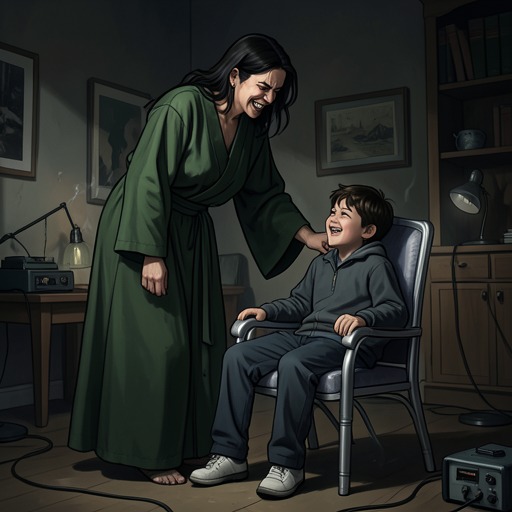
That proposed kingship has no legitimate relationship to the people or rulers of the land he is meant to conquer. When Eustace points out the injustice of the plan, Rilian briefly recognizes its implications, then slips back into laughter at the imagined surprise of the invasion. His response shows how thoroughly the enchantment has shaped his judgment: he can momentarily glimpse the wrong, but cannot yet hold on to that insight or distinguish rightful rule from force.
Rilian’s Claim and Rejection of Usurpation
After the Silver Chair is destroyed and the enchantment ends, Rilian recovers his memory and rejects the plan he had been prepared to carry out. He calls it villainy to lead an army of Earthmen into the Overworld, murder its natural lords, and seize the throne of a nation that had done him no wrong. His refusal is not merely a change of allegiance: he now recognizes that being offered a crown does not make a conquest rightful.
Rilian then states his own identity and obligation plainly: he is the son of Caspian X, the only child of the king, and intends to leave the underground court for his own country. He asks the Lady for safe conduct and a guide through her realm, but the assertion of his claim does not depend on her permission. His return is framed as both a purpose and a duty, joining personal recovery to the restoration of Narnia’s succession.
Recognition and the Meaning of Kingship
Rilian’s right is confirmed publicly when he reaches Narnia. Beasts, Dryads, Dwarfs, and Fauns recognize him; some remember him from before his enchantment, while others see his likeness to Caspian X as a young man. Yet recognition is not presented as a mere test of memory or appearance. The narrator says that something in Rilian’s face and bearing identifies him as a true king of Narnia, one who rules by Aslan’s will and sits at Cair Paravel on the throne of Peter the High King.
The response of the crowd turns that claim into a collective act of welcome: heads are bared, knees bent, and joyful embraces follow. The scene answers the kingdom’s long uncertainty with recognition and reunion, making Rilian’s return more than the arrival of a missing heir. His legitimate place is acknowledged by the people whose realm the proposed invasion would have threatened.
The Moral Measure of Rule
The narrative distinguishes rightful kingship from domination through the contrast between Rilian’s two possible roles. As an enchanted captive, he is made to imagine himself as a conqueror installed by an invading army; restored to himself, he repudiates that future and returns to his inherited country. The difference lies not in the crown alone, but in the relation between ruler, people, and rightful succession.
The silver shield provides a compact image of allegiance at the moment the company prepares to descend into the city. It had been black and without a device; now it bears the figure of the Lion in red. Rilian interprets this as a sign that Aslan will be their good lord whether they live or die. He leads the others in kneeling and kissing the image before they set out together. In that scene, the prince’s claim is joined to loyalty beyond self-preservation: the authority he accepts is measured against the higher lordship to which he and his companions commit themselves.